

Mendrisio (CH), Accademia di Architettura, Atelier Borella, Cortile Aquilone, 2022-24.
Riuso e trasformazione di un piccolo rudere di proprietà del municipio di Mendrisio, posto a pochi passi dall’Accademia./
Reuse and transformation of a small ruin owned by the municipality of Mendrisio, situated a few steps from the Accademia.
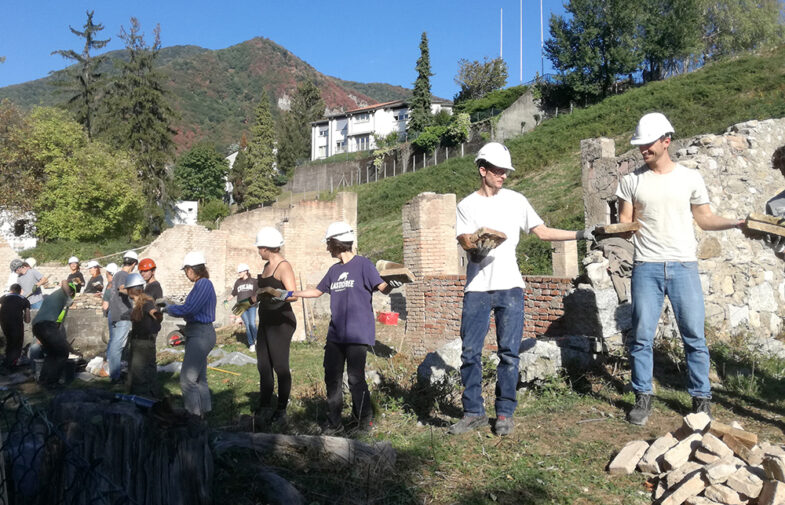
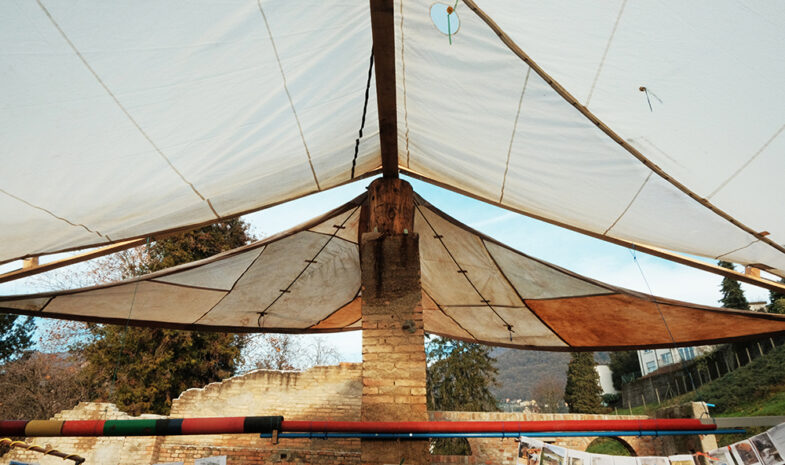
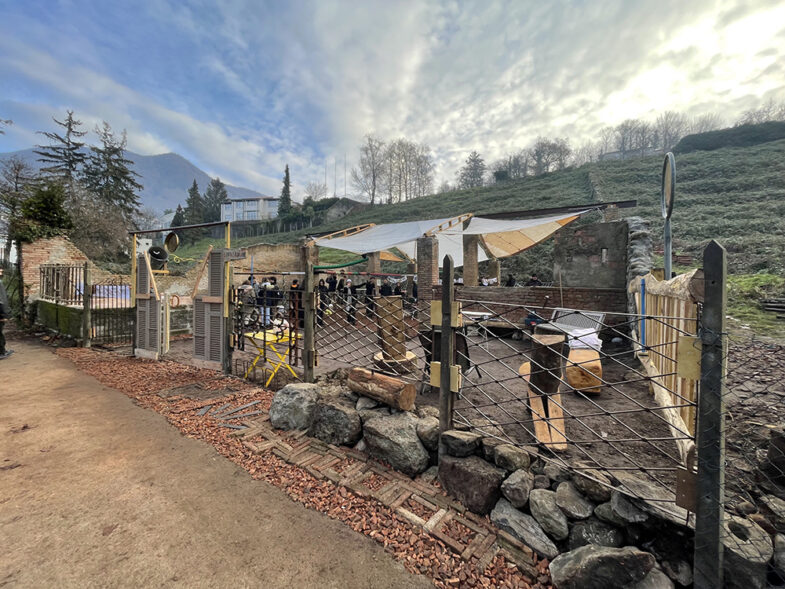
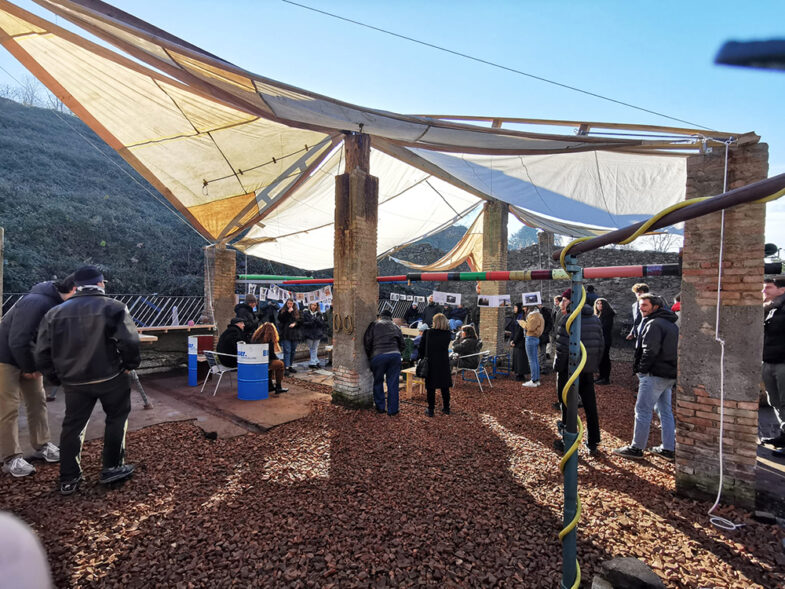
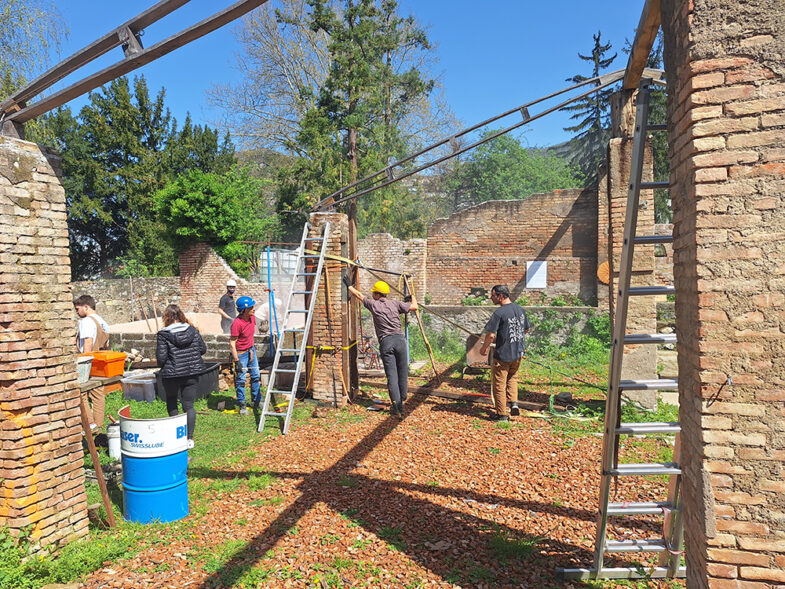
Dopo aver ripulito e studiato attentamente il sito, gli studenti hanno progettato e realizzato concretamente la prima fase dell’intervento. Il rudere inutilizzato è stato trasformato in uno spazio pubblico. Gli studenti l’hanno battezzato “Cortile Aquilone”.
L’intervento è stato realizzato esclusivamente con materiali di scarto reperiti nei dintorni, rinvenuti direttamente sul posto o prelevati dalla locale discarica, dove gli studenti hanno preso l’abitudine di recarsi per visite quasi quotidiane e altamente formative.
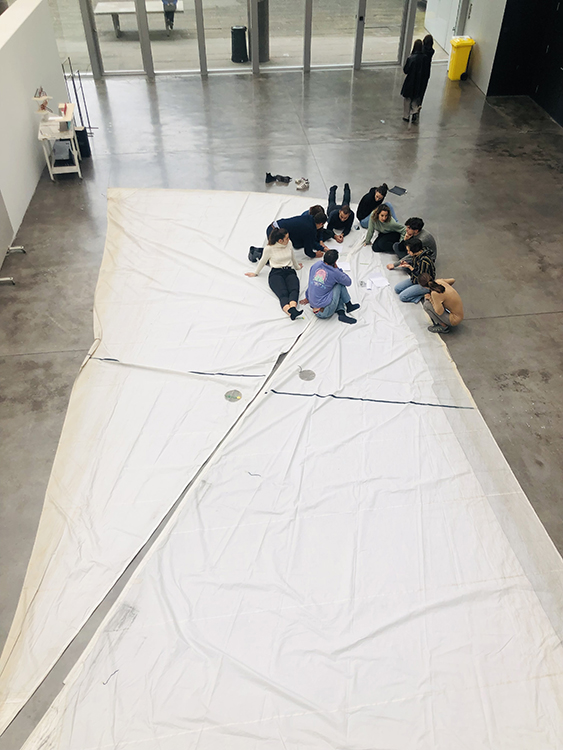
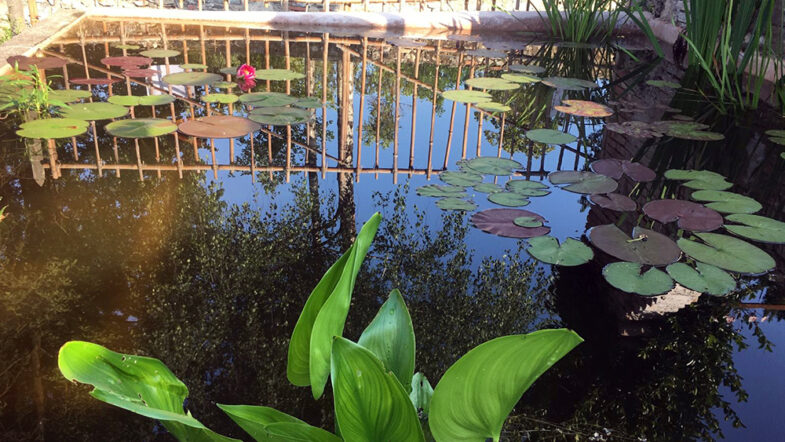
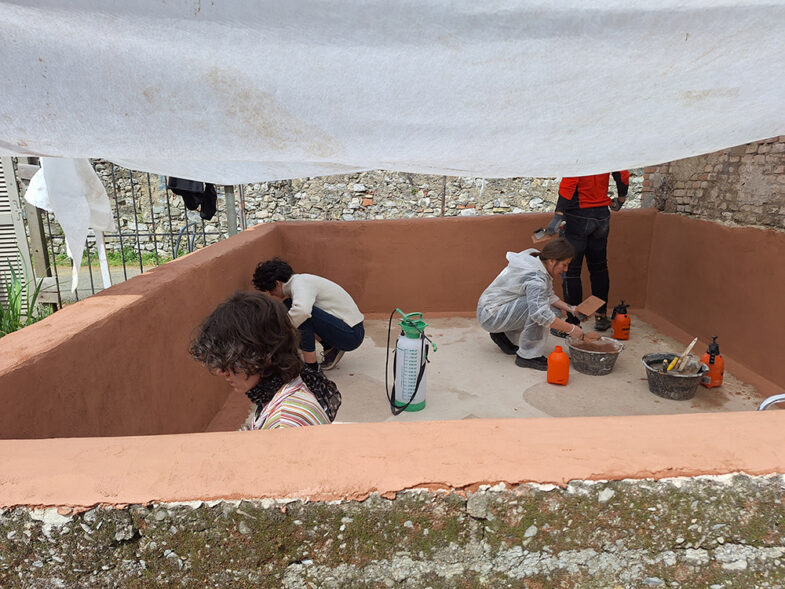
L’intervento consiste in un grande tendone parzialmente apribile appoggiato sulle strutture esistenti consolidate. L’acqua piovana che ricade sulla copertura è convogliata in un recinto in muratura preesistente, trasformato in fontana impermeabilizzandone l’interno con cocciopesto, prodotto mescolando calce idraulica e polvere di cotto (ottenuta tritando i frammenti di tegole rinvenuti sul posto).
La preparazione della domanda di autorizzazione edilizia necessaria alla realizzazione dell’intervento è stata parte integrante dell’attività didattica.
/ After having cleared and carefully surveyed the site, the students designed and actually realised the first phase of the project.
The abandoned ruin was transformed into a public space. The students christened it “Cortile Aquilone”.
The project was made exclusively with waste materials collected locally, recovered in situ or retrieved from the local dump, which the students used to visit almost daily – a highly educational experience.
The project consists of a large awning that can be partially rolled up supported by existing structures. The rainwater falling on the cover is channelled into an existing brick tank transformed into a fountain whose interior is lined in cocciopesto, made by mixing hydraulic lime and terracotta powder (created by grinding fragments of roof tiles found on site).
The preparation of the application for planning permission for the project was an integral part of the teaching programme.
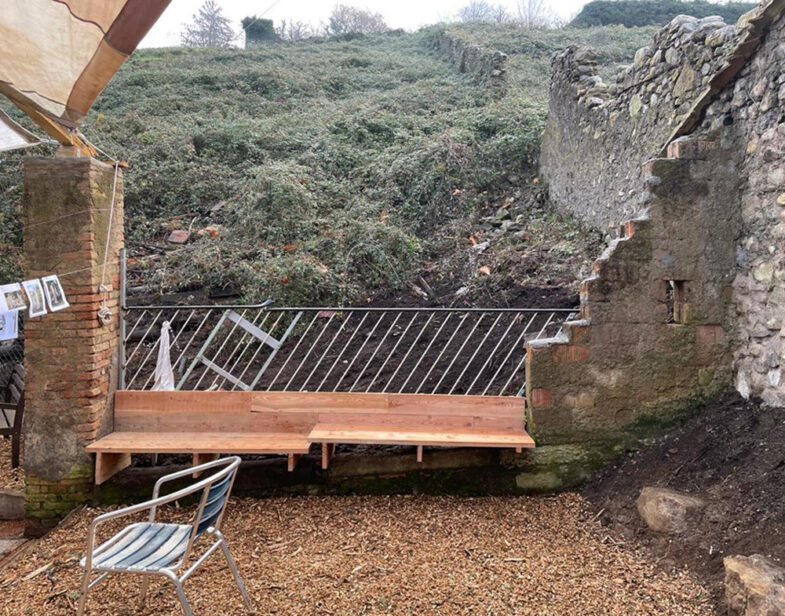
La fragilità di quanto realizzato non ha retto l’impatto con l’intensità delle intemperie e la stupidità del vandalismo.
La seconda fase è stata quindi dedicata alla riparazione e reinvenzione del Cortile Aquilone, cercando di imparare dagli errori commessi.
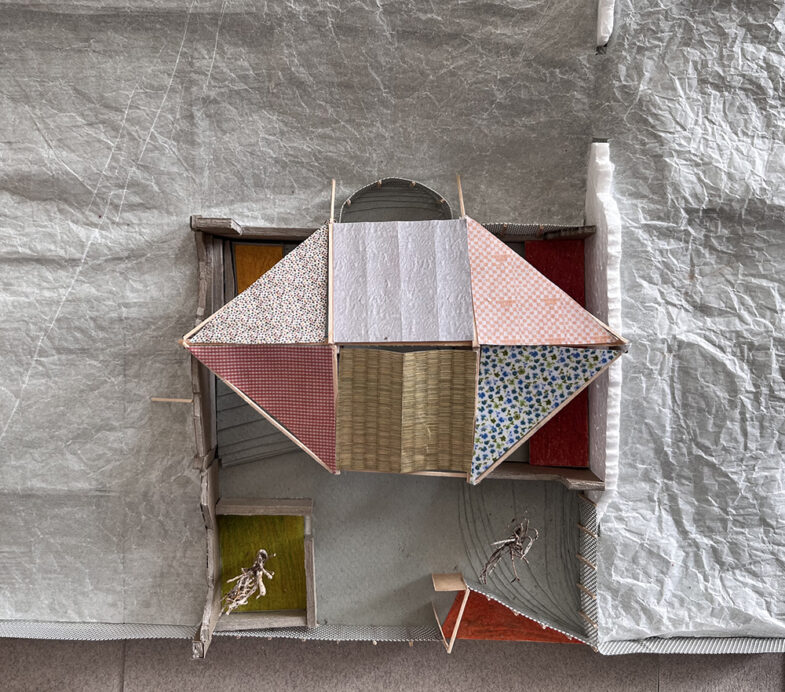
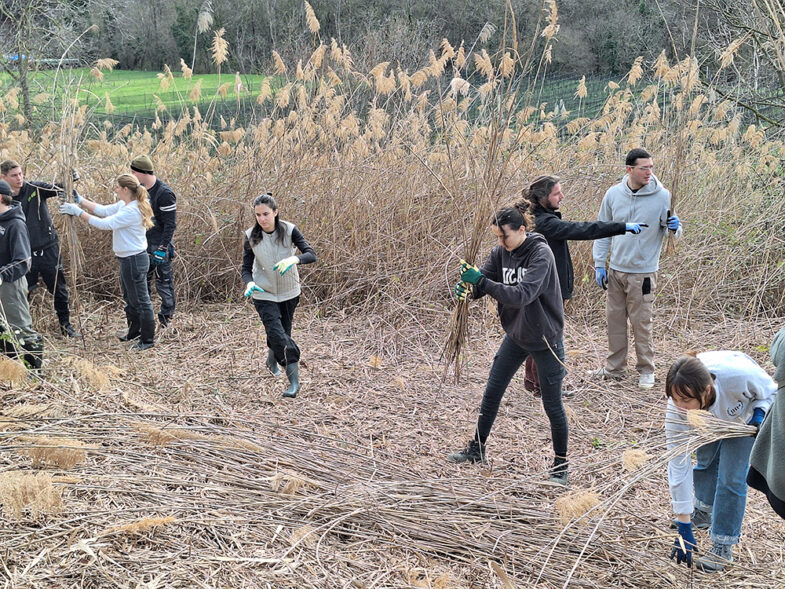
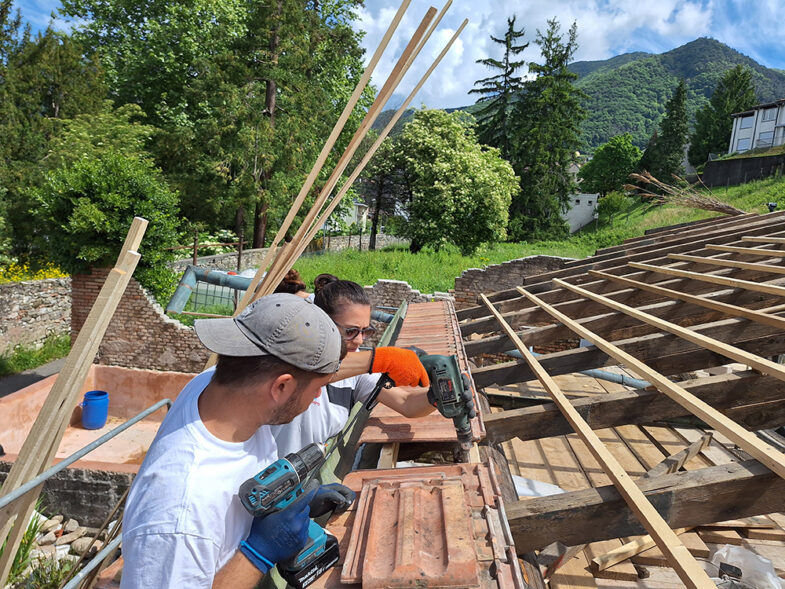
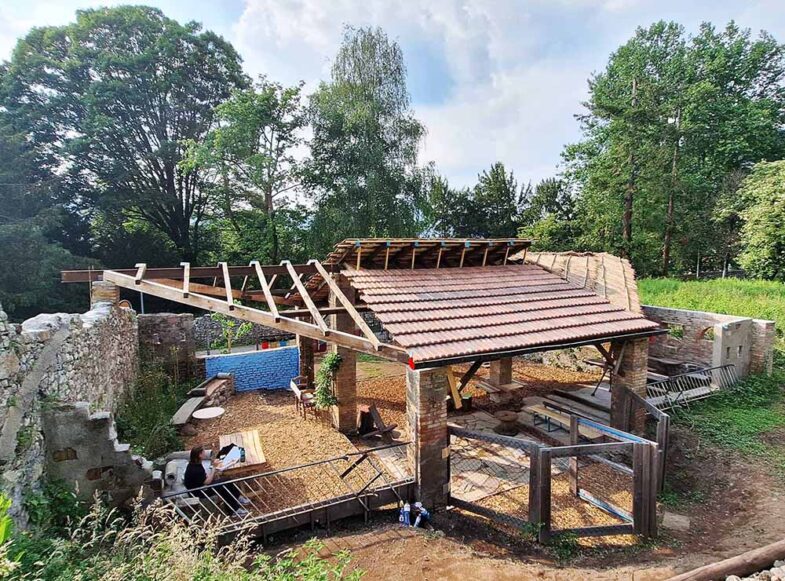
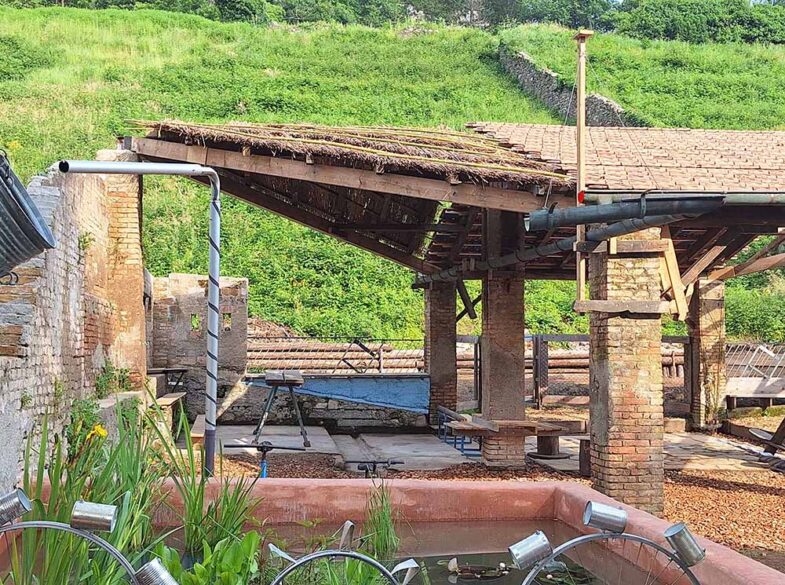
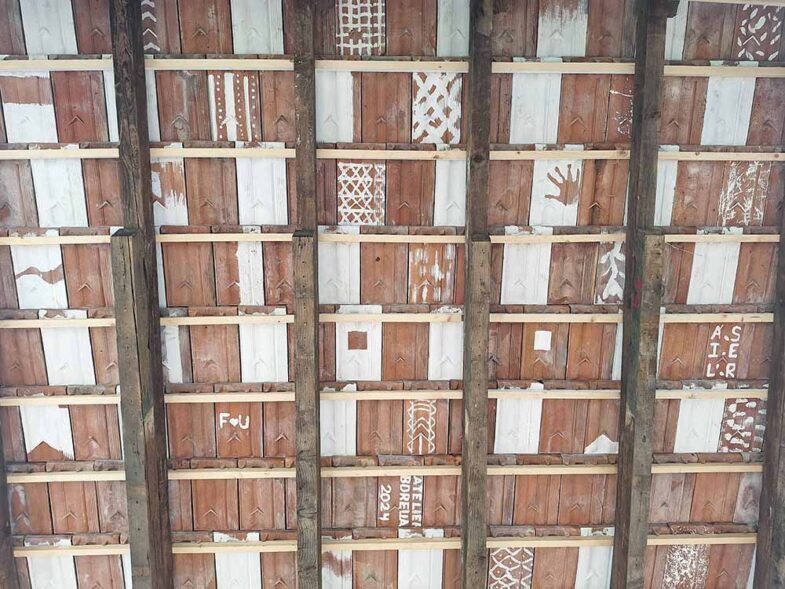
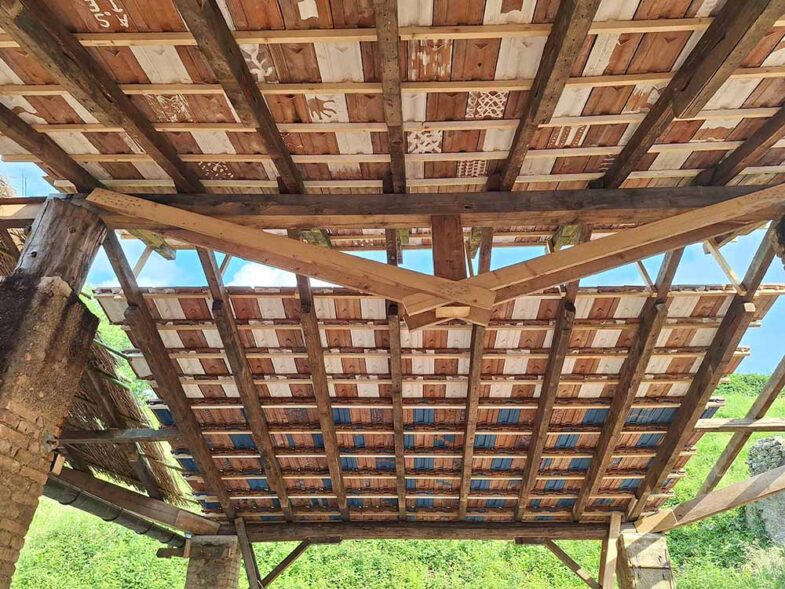
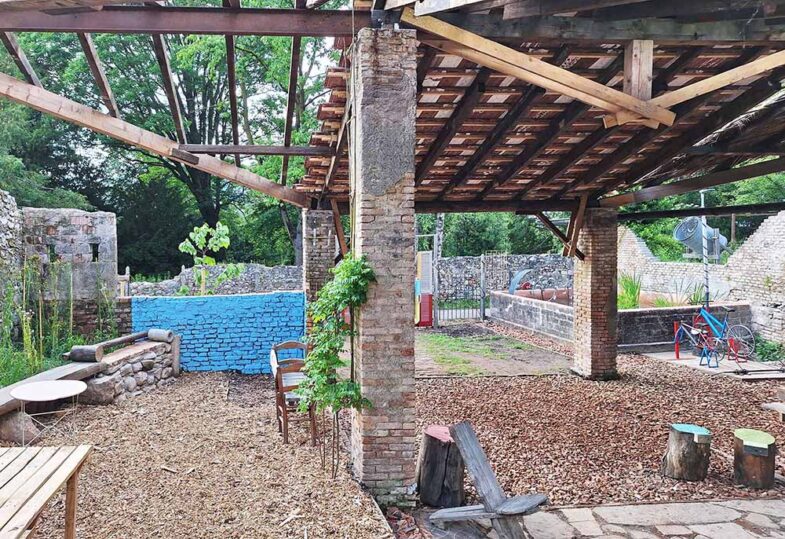
La struttura della grande tenda è stata smontata e riutilizzata per costruire panche e tavoli. La struttura della nuova copertura è stata costruita con legname proveniente dal tetto di una casa demolita poche settimane prima a qualche centinaio di metri di distanza. La parte centrale è completata con tegole marsigliesi usate, comprate su internet per 50 CHF, quella nord con canne palustri raccolte sulle colline di Arzo, mentre nella porzione sud la struttura nuda serve da pergolato, con piante di passiflora, clematis e bignonia.
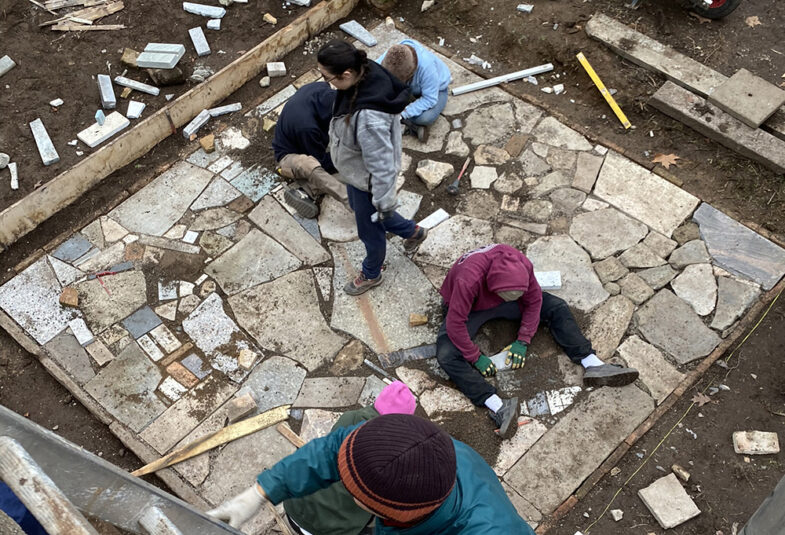
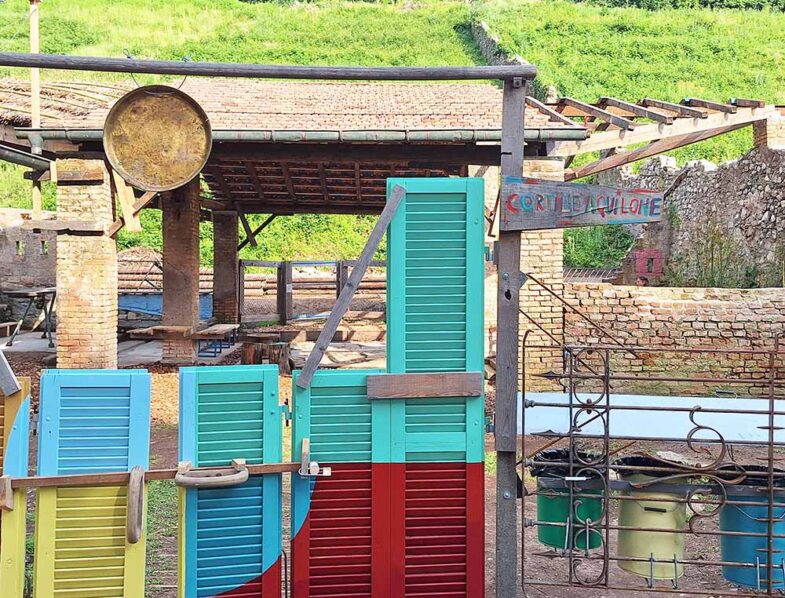
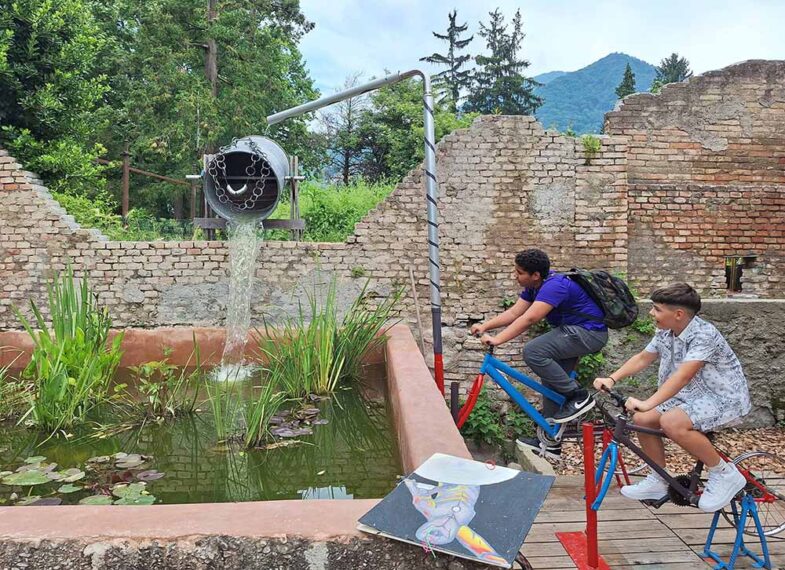
Tutte le altre parti del Cortile – la fontana dell’acqua piovana, le recinzioni, i pavimenti, i contenitori per i rifiuti differenziati, ecc… – sono state riparate o trasformate, valutando caso per caso ciò che risultava valido e durevole, e ciò che andava invece modificato o del tutto reinventato.
/ The fragility of what had been achieved did not withstand the impact of the intensity of the weather and the stupidity of vandalism.
The second phase was dedicated to repairing and reinventing the Cortile Aquilone, trying to learn from the mistakes.
The structure of the big tent was dismantled and reused to build benches and tables. The new structure was built with timber from the roof of a house demolished some weeks earlier a few hundred metres away. The central part is completed with used Marseilles tiles, bought on the Internet for 50 CHF, the northern one with marsh reeds harvested from the nearby hills, while in the southern portion the bare structure serves as a pergola, with passion flower, clematis and bignonia plants.
All the other parts of the courtyard – the rainwater fountain, the fences, the floors, the containers for sorted waste – were repaired or transformed, evaluating case by case what was good and durable, and what needed to be modified or completely reinvented.